DUI.ms – Powered by Eichelberger Law Firm, PLLC

NEED DUI HELP? CALL US NOW: 601-708-8280

Category: The Tests

Learn about the various tests law enforcement officers use to determine whether or not a driver is under the influence, including standardized field sobriety tests and breath samples.

  • The One Leg Stand test

    The One Leg Stand test

    The final SFST is the One Leg Stand (OLS) test. Like the other two before it, NHTSA has spent time and money over the years testing this test, and has statistics that show it is 83% accurate. As with the others, there are reasons to doubt those statistics that are beyond the scope of this post.

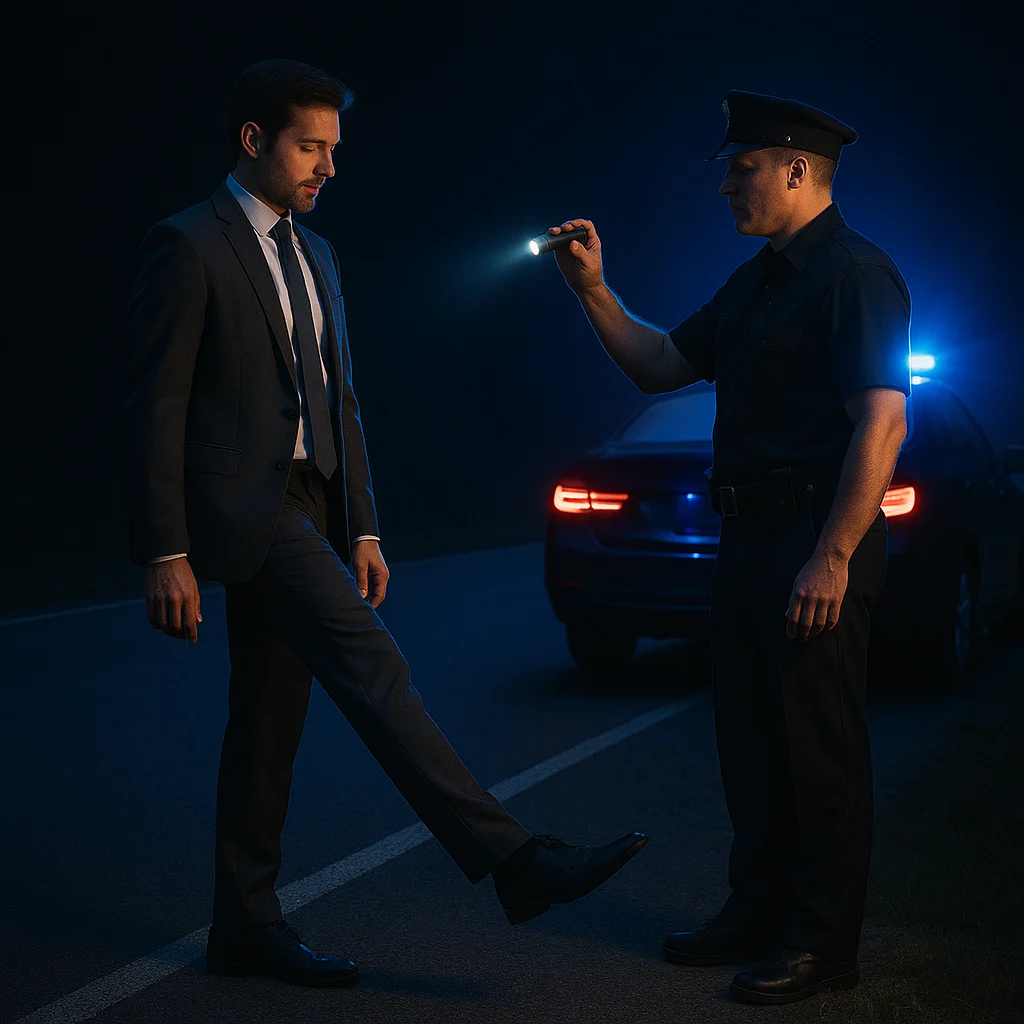
    The One Leg Stand test is what it sounds like. The officer has the driver stand on one leg with their arms at their side and count out loud until told to stop. There is an instruction stage and a “balance and counting” stage. During the instruction stage, the driver has to stand still with their feet together (as opposed to heel-toe like before) with their arms at their side. The officer tells the driver to lift either his left or right foot about 6 inches off the ground with both legs straight and the raised foot parallel to the ground. The driver is then to count out loud “one thousand one, one thousand two, one thousand three” and so on until told to stop. Unbeknownst to the driver, the officer is taught to keep the driver counting to at least “one thousand thirty.” If the officer stops the driver before then, the test is significantly less accurate according to NHTSA.

    There are four clues the officer is taught to look for during the OLS. They are:

    1. Swaying while balancing
    2. Using arms to balance
    3. Hopping
    4. Putting the lifted foot down on the ground

    Here is an example of a more narrative description of the OLS test results in a Mississippi police report for a DUI arrest:

  • Walk this way – The Walk and Turn standardized field sobriety test

    Walk this way – The Walk and Turn standardized field sobriety test

    After the officer conducts the HGN test, they are taught to conduct the Walk and Turn (WAT) test. Like the HGN test, NHTSA has spent a lot of money over the years testing it out in labs and lab-like settings. Also like the HGN test, NHTSA likes to tout statistics to make people believe the test is more accurate than it is. 

    The WAT is a divided attention test, the goal of which is to test a driver’s ability to balance while processing information. The officer is taught to first go over the instructions with the driver, and then have them perform the test. First, they tell the driver to stand still with their feet heel-to-toe and their arms by their sides as they listen to the instructions. This is not a normal way of standing, of course. The officer then gives the driver the rest of the instructions, and demonstrates it for the driver. This part not only tests the driver’s balance, but also his ability to process and remember the instructions. Here are the instructions, which vary slightly from officer to officer:

    “You are to take nine heel‐to‐toe steps in a straight line. After the ninth step, you are to turn in the prescribed manner which I will show you in a moment, then take nine heel‐to‐toe steps back down the line. You are to count the steps out loud, and watch your feet the whole time. During the turn, you keep your front foot on the line, and using your other foot to take several small steps to complete the turn. Now I will show you what I am asking you to do.” 

    NHTSA teaches officers to observe the driver’s behavior during this “instruction stage” of the WAT. After the instruction stage, the walking stage begins. During the walking stage, the driver’s attention is divided between walking heel‐to‐toe and turning, counting the steps out loud, and remembering the number of steps and how to do the turn properly. It’s…a lot.

    Officers are taught to look for the eight following clues on the WAT:

    1. Can’t keep balance while listening to the instructions
    2. Starts too soon
    3. Stops while walking
    4. Doesn’t touch heel-to-toe
    5. Steps off the line
    6. Uses arms for balance
    7. Makes an improper turn
    8. Incorrect number of steps

    Sometimes the officer gives the results of the WAT in a more narrative format in their reports, but usually it looks like this:

    WAT notes

    As you can probably guess, a lot can affect a person’s balance aside from being intoxicated. Footwear, inner ear issues, the road surface itself, and oncoming vehicles are just a few of the variables that can come into play with this test. The instruction stage can also last a very long time, which can affect a person’s ability to stand still. Weather (wind, cold, rain, etc.) can also play a factor as well.

    Next, let’s look at the One Leg Stand sobriety test.

  • The Horizontal Gaze Nystagmus Test, or “I could see it in his eyes”

    The Horizontal Gaze Nystagmus Test, or “I could see it in his eyes”

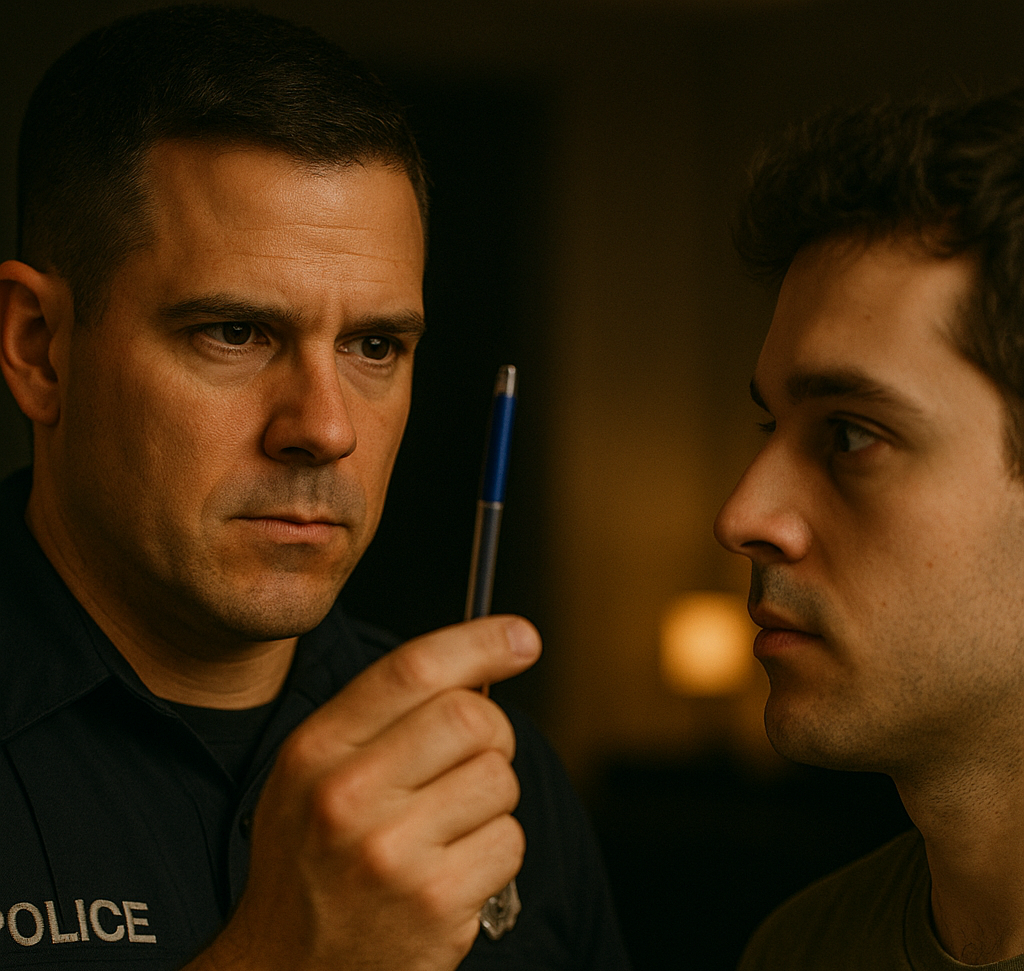
    The first of the tests is the horizontal gaze nystagmus test, or HGN. The idea behind this test is that the presence of alcohol or certain drugs in a person’s body impacts fine muscle movements, and the eyes are the best place to observe that. The officer starts by having the driver stand still with their eyes watching a small “stimulus”, like the tip of a pen, a pencil eraser, or a penlight. Since it’s usually dark outside when officers are conducting this test, a penlight is probably the most commonly used. 

    The officer then tells the driver to follow the stimulus with their eyes only, and to not move their head. They’ll say “follow it as far as you can without moving your head,” or something similar. The officer is taught to look for bumpy, “jerking” movement in the eyes. This is called horizontal gaze nystagmus, and it can be caused by many things, including high blood pressure, nicotine, antihistamines, and the flu. It can also be caused by the presence of alcohol in the body.

    As with the other SFSTs, there are a list of “clues” that the officers are looking for. They are to examine each eye for three clues, always starting with the left eye. The maximum number of clues for each eye is three, so the maximum number of clues on the HGN test is six. The three clues are:

    1. Lack of smooth pursuit – the driver’s eye jumps from point to point instead of smoothly following the pen all the way to the side
    2. Distinct and sustained nystagmus at maximum deviation – when the driver’s eye has gone as far as it can to the side, the eye twitches
    3. Onset of nystagmus prior to 45 degrees – the driver’s eye begins to jerk before reaching a 45-degree angle

    There are plenty of reasons to doubt the accuracy of these “clues,” but that’s what the NHTSA teaches the officers to look for. Typically, an officer’s report will read something like this: 

    Notice how the officer went in order from 1 through 3 with each clue and reported a total of six out of six clues. Also notice how the officer mentions vertical nystagmus. Vertical nystagmus doesn’t have the same history of testing that horizontal nystagmus does, but that doesn’t stop the NHTSA from mentioning it in their training programs or officers from talking about it in their reports.

    Next, let’s look at the Walk and Turn, or WAT.

  • Standardized Field Sobriety Tests, or “Pre-Arrest Screening”

    The next phase of DUI investigation is something the National Highway Traffic Safety Administration (NHTSA) calls “Pre-Arrest Screening,” which seems by its name to imply that the decision to arrest has been made. “Pre-Arrest Screening” sounds like something an officer does to make sure the person being arrested doesn’t have any medical issues, and not to make sure the arrest should happen in the first place. But I digress.

    The first step in the “Pre-Arrest Screening” phase is putting the driver through Standardized Field Sobriety Tests (SFSTs), or what a lot of us (law enforcement and lawyers) call “Stupid Human Tricks” after the Dave Letterman bit. The NHTSA’s spent a lot of money developing these tests over the years, and they are quick to tout the “success rate” of these tests in identifying impaired drivers. The problem is that these tests were developed in lab or lab-like settings, with sober test subjects (.00-.05% BAC) or very intoxicated ones (.15% or higher BAC). That’s not to say that they don’t have some validity, but crowing about a test’s ability to identify people with a BAC twice the legal limit strains credulity just a bit, doesn’t it? 

    The three Standardized Field Sobriety Tests are the Horizontal Gaze Nystagmus test (HGN), the Walk-and-Turn test (WAT), and the One Leg Stand test (OLS).

  • The DUI Investigation Mistake That Could Help Your Defense in Mississippi

    The DUI Investigation Mistake That Could Help Your Defense in Mississippi

    Intro

    In the DUI cases we handle, I’m seeing DUI officers make a certain mistake more and more often lately. In fact, this mistake is so common with a few Mississippi law enforcement agencies that you could say it might even be their policy. That mistake centers on the improper use of and reliance upon the Preliminary Breath Test, or PBT. The officers are using it at the wrong stage of the DUI investigation and creating reasonable doubt left and right as a result.

    What is a PBT?

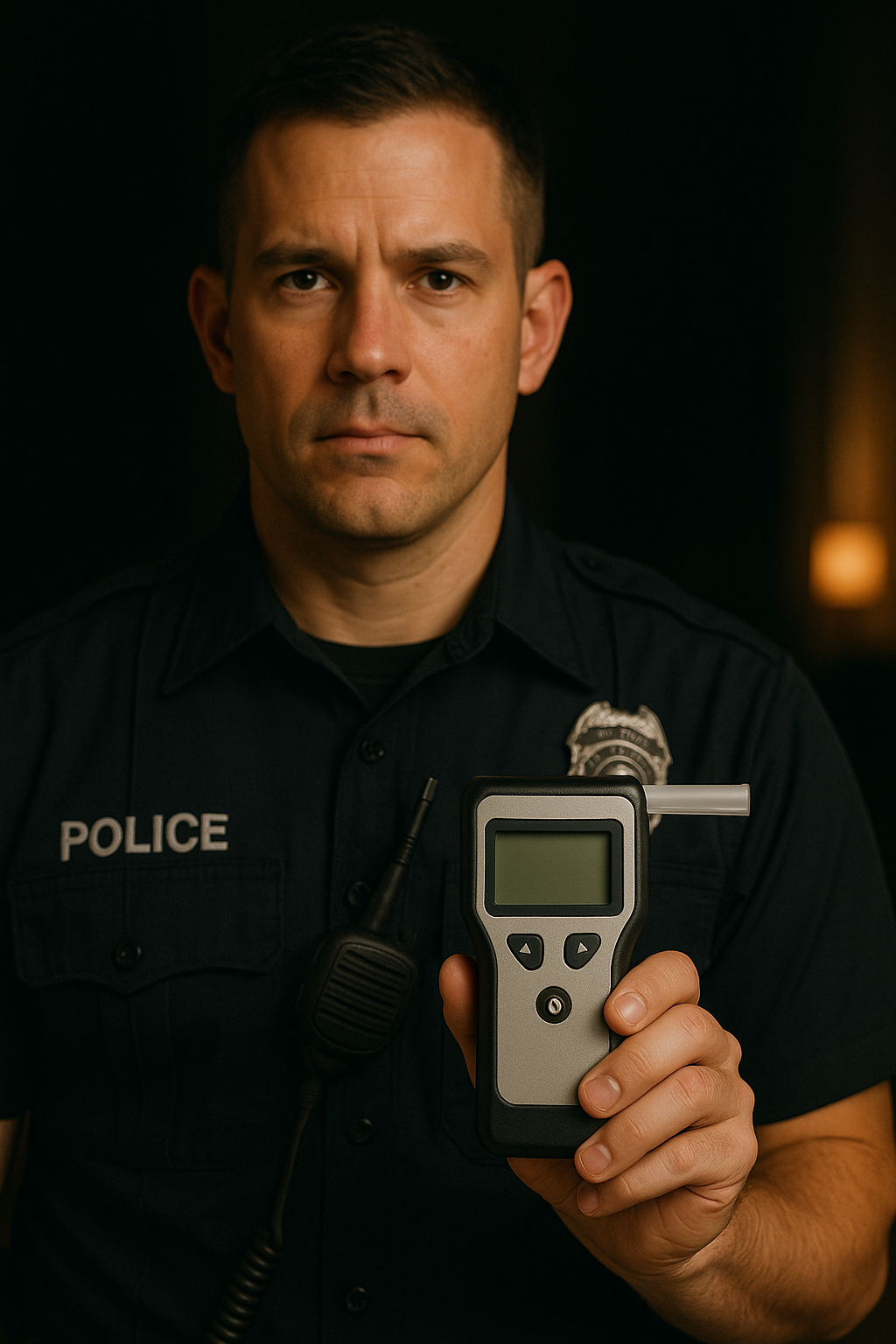
    Before I go any further, let me explain what a PBT is. The PBT, which we sometimes call a handheld, is a small device about the size of a cell phone. It is a portable breath testing machine. Now, the Intoxilyzer is the larger, mounted device that is the one used after arrest to get a person’s BAC. That’s not what we’re talking about here. The PBT is smaller and less reliable. The numbers it gives are not admissible in court in Mississippi. It is just an indicator that there is alcohol in a person’s system.

    NHTSA Training

    DUI officers across the country are all taught the same way, using training manuals created by the National Highway Traffic Safety Administration, or NHTSA. The methods of DUI detection taught in the NHTSA have been developed over a half century of at least somewhat scientific study. These investigative methods have very specific rules to them, and when those rules are followed, NHTSA says the results can provide probable cause to arrest someone for DUI.

    The manual that each officer is trained on, which we call “the NHTSA manual,” is also very specific about when an officer is to use the PBT. The current NHTSA manual, which was published in 2023, tells us SIX different times that the PBT should be used AFTER the officer completes the Standardized Field Sobriety Tests. Not BEFORE those tests, but AFTER those tests.

    Why is that? The officer is to properly use the three Standardized Field Sobriety Tests – the HGN test, the Walk and Turn, and the One Leg Stand – to figure out whether the driver is impaired. AFTER the officer has established that the driver is impaired, he THEN uses the PBT to gather evidence that alcohol is the reason for the impairment that he has already established. This specifically is spelled out on Page 18 of Session 7 in the NHTSA manual.

    The Common Mistake in DUI Investigations

    Too often we are seeing officers asking “have you had anything to drink tonight?” and if the answer is yes, sticking the PBT in the driver’s face and just saying “blow in this.” Then they are making the arrest with that as the basis. That is directly contrary to the NHTSA manual and turns DUI investigation upside down. There is no evidence of impairment, and NHTSA itself says that is not what an officer should base a DUI arrest on.

    Conclusion

    If you or a loved one are facing a DUI in Mississippi, reach out to us and let us help you. DUI cases are not nearly as cut and dried as people make them out to be, and in fact they can be extremely complex. The consequences can be extreme, too. But don’t worry. Our firm has decades of experience representing people in courts across Mississippi. From the Coast to the Jackson Metro to the Memphis suburbs and everywhere in between, we’re here to help. Give us a call today at the Eichelberger Law Firm and let us go to work for you.